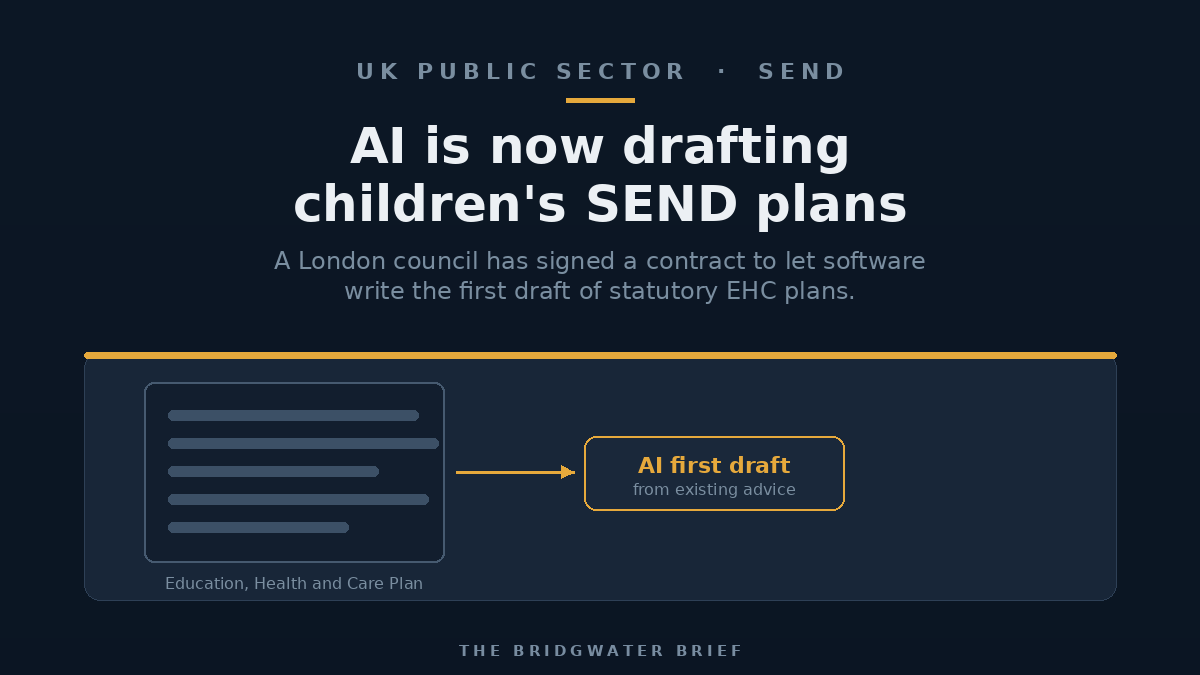
The London Borough of Harrow has signed a two-year contract to use artificial intelligence to help draft its Education, Health and Care Plans, the legally binding documents that set out the support a child with special educational needs or disabilities must receive. A government contract notice published on 27 October shows the council has bought VITA, software the notice describes as an "AI-assisted EHCP drafting solution", alongside a separate quality-assurance module. The deal is small in money terms, £120,000 before VAT over two years, and the plans are still meant to be finalised by council officers. But it is a concrete sign of where stretched SEND teams are turning: to software that writes the first draft of a document families often fight for years to get right.
This piece reflects reporting as of October 2026. The contract is signed, but how VITA performs in practice is largely reported by its maker and is not yet independently measured.
What Harrow has actually bought
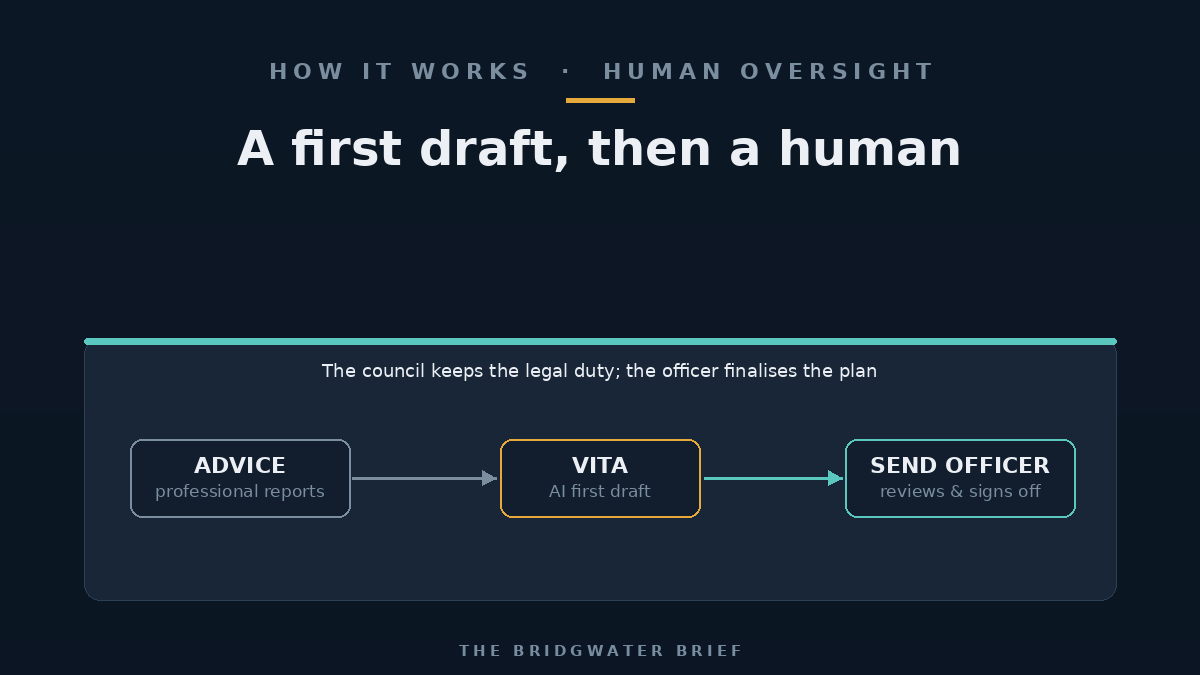
The contract covers two linked tools. The first, VITA, generates a structured first draft of an EHC plan from the professional advice and supporting documents a case already contains, laying it out in the council's own template. The second is a quality-assurance module that checks finished plans against recognised standards and produces management information on them. VITA is made by Invision360, the trading name of Invision Services Limited, a company that already sells EHCP auditing tools to councils. The firm says the drafting tool is purpose-built for SEND teams rather than a general chatbot: it cites the source evidence behind each section, moves routine "ordinarily available" provision into a review panel, and leaves a SEND officer to amend and sign off the plan. On the company's account, every draft is also reviewed by an experienced SEND professional before it is delivered.
Those are sensible design choices on paper. They are also, for now, the company's own description of its product. Invision360 does not publish figures for how much time VITA saves or how accurate its drafts are, and no independent evaluation of the tool is yet in the public domain. The honest position is that the safeguards sound right and remain unproven at scale.
Why councils are reaching for this
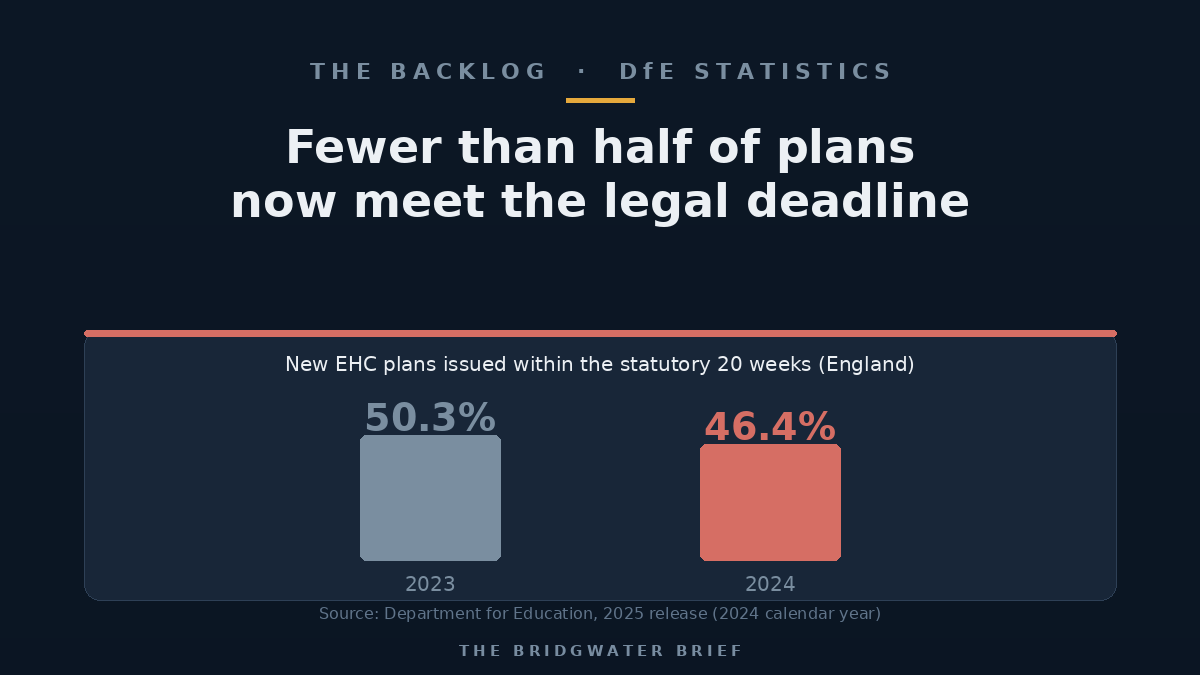
The pull is the backlog. An EHC plan is supposed to be issued within 20 weeks of a council agreeing to assess a child. In 2024, according to Department for Education statistics, just 46.4% of new plans met that deadline, down from 50.3% the year before. More than 638,000 plans were active in England at the start of 2025, and demand keeps climbing. Behind each late plan is a child without agreed support and, often, a family in a drawn-out dispute. Writing a plan is slow, document-heavy work, and that is exactly the kind of task a drafting tool is pitched at. VITA was backed by an Innovate UK Smart Grant and has been trialled or commissioned by several authorities, including Kent, Tameside and Sunderland, before Harrow.
Where the caution belongs
An EHC plan is not an internal memo. It is a statutory document a council can be held to at tribunal, describing a named child's needs and the provision that must follow. Three questions matter more than the technology. Does the AI draft quietly thin out the provision a plan should contain, especially the "ordinarily available" support it is designed to move aside? Can a busy officer, under the same time pressure that made the tool attractive, give each draft the scrutiny the safeguard assumes? And is the parent told that the first draft of their child's plan was machine-written, so they can judge it with that in mind? None of these is a reason to reject the tool. They are the things an honest rollout has to answer, and they are not answered by a procurement notice.
There is also a quieter point about consistency. A tool that drafts to a template can raise the floor, making thin plans less thin, which is a real gain in a system where quality varies sharply between councils and even between caseworkers. The same mechanism can flatten the individual detail that makes a plan fit one particular child. Both can be true at once, and which one wins depends entirely on how the human review is resourced.
FAQ
Does this mean a computer decides my child's support?
No. On the contract and the supplier's description, VITA writes a first draft from existing professional advice; a council SEND officer is responsible for reviewing, amending and finalising the plan. The legal duty still sits with the council, not the software.
How much is Harrow spending?
The notice records £120,000 before VAT, or £144,000 including VAT, over a two-year term running to 30 September 2028. That is a modest contract by local-authority standards and sits below the formal procurement threshold.
Is anyone checking whether the AI drafts are any good?
Not publicly, yet. The supplier reports internal review by SEND professionals and sells a separate quality-assurance module, but there is no independent evaluation of VITA's accuracy or time savings in the public domain. That is the main gap to watch.
Will parents be told AI was used?
The contract notice does not say. Whether families are told that the first draft of a plan was machine-generated is a disclosure decision for the council, and worth asking about directly.
The takeaway
Harrow's contract is small, but it marks a line being crossed quietly across local government: AI is now drafting the statutory plans that decide what support disabled children get. The case for it is real, because the system is overwhelmed and fewer than half of plans arrive on time. The risk is equally real, because the safeguard that makes it acceptable, a human reading every draft properly, depends on the very capacity the tool exists to stretch. This is worth watching not as a gadget story but as a test of whether a public service can adopt AI without letting it erode the thing it is supposed to protect.
Sources
- Find a Tender – London Borough of Harrow, VITA EHCP drafting and QA contract notice (27 October 2026)
- Department for Education – Education, health and care plans statistics (published 26 June 2025)
- Invision360 – VITA AI EHCP drafting tool product page
- LocalGov – Invision360 secures Innovate UK Smart Grant for VITA (30 October 2024)